
Categories
- Billy Bladez Custom Conjure Ancient Civilizations
- Billy Bladez Custom Conjure Extraterrestrials
- Billy Bladez Custom Conjure Multi-Dimensionals
- Billy Bladez Custom Conjure Orphans
- Billy Bladez Custom Conjure Pre-Historics
- Billy Bladez Custom Conjure Spirits for the Youngsters
- Billy Bladez Custom Conjure Totem Animals
- Billy Bladez Custom Conjure Yokai
- Billy Bladez Custom Conjured Angels
- Billy Bladez Custom Conjured Black Arts Companions
- Billy Bladez Custom Conjured Creatures
- Billy Bladez Custom Conjured Demons
- Billy Bladez Custom Conjured Djinn
- Billy Bladez Custom Conjured Dragons
- Billy Bladez Custom Conjured Elementals
- Billy Bladez Custom Conjured Elves
- Billy Bladez Custom Conjured Fae
- Billy Bladez Custom Conjured Gifted Humans
- Billy Bladez Custom Conjured Mer-Folk and Sea and Water Spirits
- Billy Bladez Custom Conjured Non-Categorized Spirit Listings
- Billy Bladez Custom Conjured Portals to the Immortals
- Billy Bladez Custom Conjured Sexual Spirits
- Billy Bladez Custom Conjured Vampires
- Billy Bladez Custom Conjured Were-Creatures,Shifters and Hybrids
- Billy Bladez Exclusive Spirit Conjures
- Billy Bladez Multi Spirit Special Custom Listings
- Billy Bladez Pre-Conjured Black Arts Beings/Pics Included
- Billy Bladez Pre-Conjured WA/DA Companions w/ Pic Included
- Billy Bladez Pre-Done Astral Landscapes
- Billy Bladez Reiki Healing Services
- Billy Bladez Resellers Listings
- Billy Bladez Samhain/Halloween Conjures
- Billy Bladez Spirit Keeping Education Center & Resources
- Billy Bladez Spirit order Add-On Listings and Readings
- Billy Bladez Triad Spirit Listing
- Custom Conjures by Archelone AKA The Grey Mage
- Hand-Crafted Spelled Spirit Charging/Offering boxes
- Hecate's Mystical Boutique
- Pre-Conjure Reviews
- Spirit Add-Ons
- Support the Circle
- Tarot Readings by Moon Walker Master Tarot Reader
- The Complete Beginners Guide To Spirit Keeping by Billy Bladez
- Featured Products ...
- All Products ...
New Products [more]

Pre-Conjure Bannik DA
Sale: $5.00
Save: 97% off

Pre-Conjure BA Vampire
Sale: $12.00
Save: 95% off
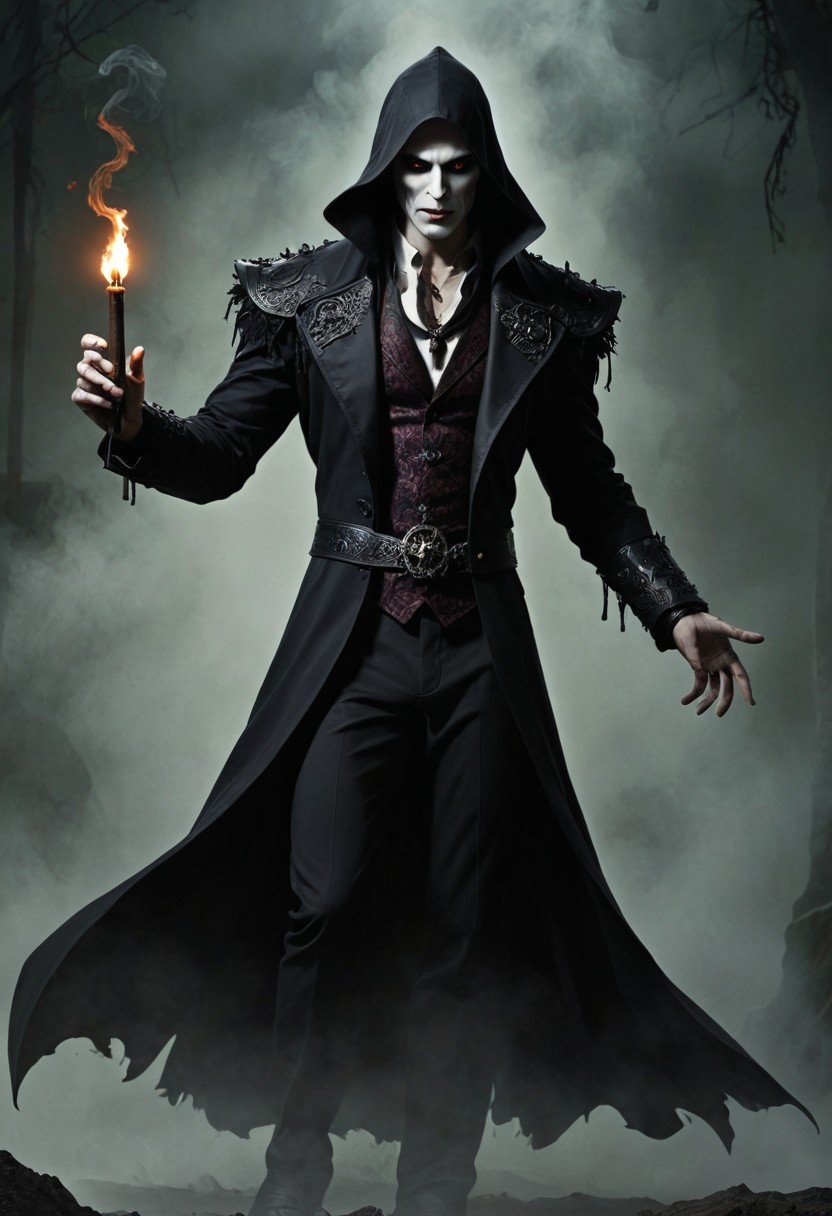
Pre-Conjure BA Vampire
Sale: $12.00
Save: 95% off


Featured [more]

Custom Conjure Stegosaurus
Sale: $10.00
Save: 94% off

Custom Conjure Wooly Mammoth
Sale: $10.00
Save: 94% off
Dark Arts vs Black Magic and the Role of Intent
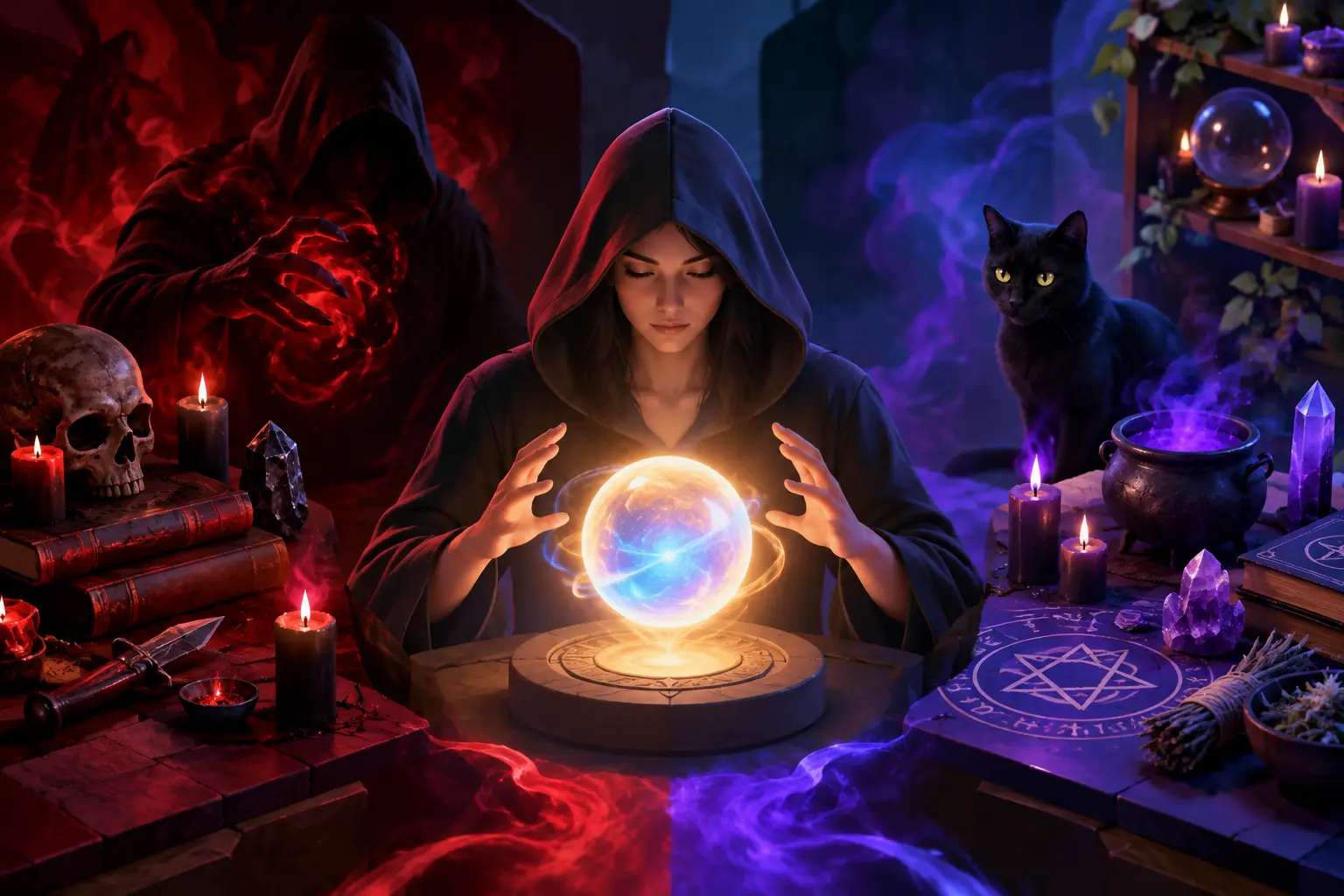
A binding offered for protection after a painful betrayal can look very different from a working meant to control another person’s feelings. Yet both may be labeled with the same loaded language by someone looking in from the outside. In the conversation around dark arts vs black magic, the labels matter less than many practitioners think. Intent, consent, method, relationship, and accountability reveal far more about the character of a practice.
For pagans, spirit keepers, and occult explorers, this distinction is not merely academic. It shapes how you choose companions, approach spellwork, set energetic boundaries, and decide which practitioners you trust. The darkest-looking current is not automatically harmful, and the sweetest-looking ritual is not automatically ethical.
Dark Arts vs Black Magic: Why the Terms Get Confused
“Dark arts” is a broad and flexible term. Depending on the tradition, it may describe magic that engages shadow, the underworld, ancestral mysteries, fierce deities, death symbolism, baneful correspondences, difficult transformation, or darker-aligned spirits and entities. It can also be used loosely for any practice that makes outsiders uncomfortable.
That is a very wide container. A shadow-working ritual for confronting self-sabotage, a ward built with iron and cemetery dirt, and a respectful relationship with a darker-natured spirit companion might all be called dark arts. None of these automatically require a desire to harm anyone.
“Black magic,” by contrast, is often used as a moral accusation. In common modern usage, it usually points to workings intended to dominate, manipulate, exploit, curse, injure, or override another person’s free will. However, the phrase has a complicated history. Different cultures define it differently, and it has sometimes been used to dismiss unfamiliar religions or indigenous spiritual practices as dangerous or inferior.
For that reason, experienced practitioners should resist treating either term as a universal category. One person’s black magic may be another person’s justified justice work. One person’s dark art may be a deeply reverent ancestral practice. Context is not an excuse for careless behavior, but it is necessary for clear discernment.
Dark Does Not Mean Evil
Darkness has an honest place in spiritual practice. Night, winter, grief, endings, rage, the dead, the hidden self, and the wilderness all carry dark symbolism. They are also part of life. A path that recognizes only light can become spiritually shallow, especially when it pressures people to bypass pain, suppress anger, or forgive before they are ready.
Dark arts often work with what has been buried. That may include reclaiming personal power after abuse, cutting energetic cords, identifying unhealthy patterns, grieving a past version of yourself, or creating formidable protection around your home and spiritual space. These workings can feel intense because transformation is not always gentle.
A darker-aligned companion is not inherently malicious, either. In spirit keeping, alignment is not a substitute for discernment. A companion with fierce, assertive, chaotic, predatory, or underworld-associated energy may be an excellent match for a keeper seeking courage, boundaries, truth, or shadow integration. The question is whether the relationship is approached with respect, clear communication, and a realistic understanding of the being’s nature.
No spirit companion should be treated as a vending machine for revenge, obsession, or control. A meaningful connection asks more of the keeper: consistency, offerings or devotional attention where appropriate, grounded expectations, and willingness to hear guidance that may not flatter the ego.
Intent Is the First Test, Not the Only One
Intent is central, but “my intentions are good” cannot be the end of the conversation. Many harmful actions have been justified through self-serving intentions. A better ethical examination includes what you want, who may be affected, how you plan to act, and whether you are prepared to carry the consequences.
Consider a love working. A spell to increase your own confidence, invite reciprocal romance, heal heartbreak, or help you recognize emotionally available partners is fundamentally different from a working focused on making one specific person want you against their will. The first centers your own energy and openness. The second attempts to reach into someone else’s agency.
The same distinction appears in justice work. It may be reasonable to seek truth, protection, accountability, the return of what was taken, or an end to harassment. But there is a meaningful difference between stopping harm and escalating it indefinitely. If a working is fueled by the desire to make someone suffer simply because you are suffering, pause before you proceed.
A useful question is this: if the situation were reversed, would you consider this energetic action fair? That question will not solve every complicated case, but it can expose rationalizations quickly.
Consent, Coercion, and Energetic Boundaries
Consent is one of the clearest lines in ethical magical practice. It applies to love, healing, spirit work, divination, and any working aimed at another person. You may pray for someone’s well-being, send broadly offered healing, or ask that they receive what serves their highest good. But attempting to alter their choices, emotions, sexuality, loyalties, or beliefs moves into coercive territory.
There are gray areas. Parents may pray for a child’s safety. A practitioner may perform protective work for a household. A friend may request Reiki or spiritual support during a crisis. In each case, communication and permission matter when they are possible. When consent cannot be obtained, keep the intention protective, non-invasive, and open-ended rather than controlling.
Consent also matters with spirits. Do not assume every being wants the same kind of relationship, task, altar arrangement, or level of interaction. Personalized conjuration and careful matching can be valuable because spiritual compatibility is not generic. A companion attuned to your goals and energy may support a more stable relationship than a random impulse choice, but matching is only the beginning. Respect must continue after the binding enters your space.
The Difference Between Protection and Retaliation
Protection is one of the most misunderstood areas of dark practice. Strong wards, reversals, return-to-sender workings, uncrossing, banishing, and protective companions can be appropriate responses to unwanted energy. They are not automatically black magic simply because they are forceful.
The difference often lies in the aim. Protection establishes a boundary: this harm does not enter my life, home, body, or spiritual field. A reversal may send projected negativity away from you without adding your own malice. A banishing may remove an influence from your space.
Retaliation has a different emotional signature. It seeks to pursue, punish, humiliate, dominate, or destroy. Sometimes people choose that route after real harm, and no article can flatten every lived experience into a simple rule. Still, retaliation often keeps the practitioner energetically tied to the person they want to escape. The working may become a ritual of continued attachment instead of release.
Before performing intense work, strengthen the foundations first: cleanse your space, reinforce wards, rest, journal, confirm mundane facts, and consider whether practical steps are needed. Spiritual practice should support sound judgment, not replace it. If there is stalking, violence, fraud, or immediate danger, contact the appropriate real-world support and authorities.
Choose Your Practice With Clear Eyes
The dark arts are not a shortcut around responsibility. In many cases, they demand more self-honesty because they bring desire, anger, grief, and power to the surface. That can be deeply healing when practiced with discipline. It can also become destabilizing when approached as fantasy, spectacle, or a way to avoid hard choices.
When choosing a practitioner, service, or spiritual companion, look for clarity rather than grand promises. Ethical guidance does not guarantee a lover, erase every obstacle, or promise domination over another person. It helps you articulate your goal, understand the energetic approach, and enter the work with consent, grounding, and respect for the forces involved.
At The Pagan Shop Online, personalized spiritual work is most powerful when it becomes part of an ongoing practice rather than a single desperate transaction. Keep a journal. Track dreams, shifts in mood, synchronicities, and practical changes. Maintain your wards. Speak honestly with your companions. Give a working time to unfold, while remaining willing to adjust your actions in the physical world.
Darkness can be a teacher without becoming a master. If you approach it with discernment, firm boundaries, and respect for the free will of others, you can meet its lessons with your power intact.

Important Links
- Spirit Companion Codex
- The PaganShopOnline.com's Circle of Conjurors
- The PaganShopOnline.com's FAQ's
- Transparency in Spirit Conjuring: Ethics, AI and Integrity
- Spirit Matching Quiz ( Help Find the Best Beings for You)
- Pagan Shop Online Chatroom
- The Pagan Shop Online Forum
- ThePaganShopOnline's Blog
- The Conjuror’s Eye: An Exclusive Pagan Shop Experience
- The Conjuror's Deck: An Exclusive Pagan Shop Experience
- The Conjurors Insight: An Exlusive Pagan Shop Experience
- The Conjuror's Oracle: An Exclusive Pagan Shop Experience
- The Conjuror's Board: An Exclusive Pagan Shop Experience
- The Conjuror's Numerology Matrix An Exclusive PS Experience
- The Conjuror's Stones An Exclusive Pagan Shop Experience
- The Conjuror's Horoscope An Exclusive Pagan Shop Experience
- The Conjuror's Mirror A Exclusive Pagan Shop Experience
- The Conjuror's Dream Interpreter An Exclusive P. Shop Experience
- Sigil Maker
Reward Points
Log in to see how many reward points you have already earned
Sponsors
 |
Bestsellers
- In-Depth Reading of your spirit
- Custom Conjure Royal(Monarch)...
- Spirit Picture Upgrade From Basic...
- Custom Conjure Bound DA Spirit or...
- DA/WA Spirit/Entity Reverse...
- Ultimate Add On Spirit Package
- 3 body Binding Add-On Spirit,Astral...
- 2 body Spirit Binding
- Reverse Adoption for Gifted Humans
- DA Demonic Reverse Adoption by...